
Inquiry learning: Pitfalls and perspectives part #2

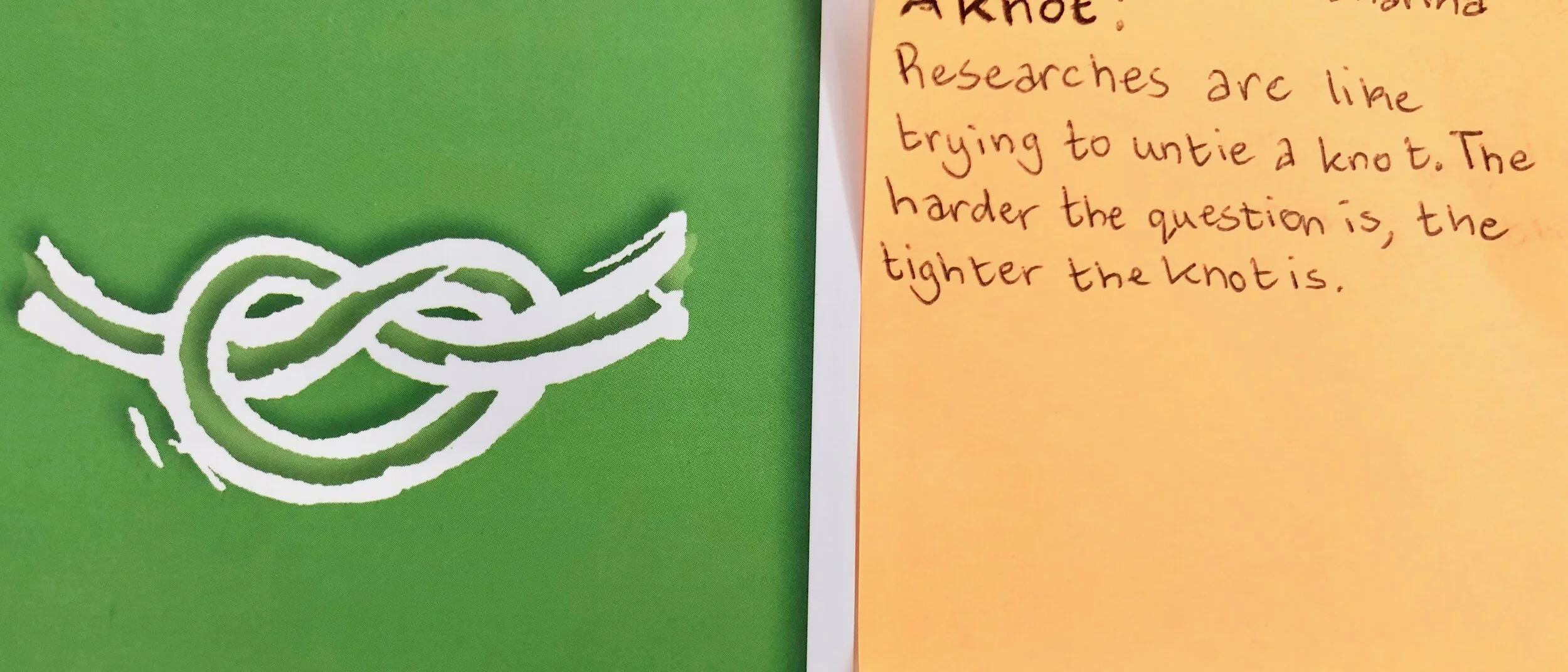
In my previous post, I shared the importance of staying open-minded to other perspectives on inquiry learning, particularly the conclusions drawn from research that suggests it is ineffective.  I singled out work on cognitive load theory and on episodic and semantic memory in particular but can, of course, add Hattie’s work on the low “ effect size” of inquiry learning. To reiterate, these posts are not about defending inquiry nor critiquing the research itself – there is plenty of that out there! Rather I am sharing the benefits I receive from approaching criticism with curiosity and asking myself: what can I learn here?   

 In this and the next post, I will share some lessons we can learn from those who argue the case against inquiry learning. 

 1.    Engagement does not necessarily mean learning. 

I know this is not a new idea. But it is worth us reminding ourselves that it IS easy to mistake the delight, connection and interest so beautifully generated by inquiry for learning itself. The compelling nature of inquiry is both a strength - and a challenge.  We’ve all been guilty of designing fabulous, hands-on investigative experiences that lead to little more than a fond memory.  The lesson for us is not to forgo the engaging tasks - far from it - but to remain keenly aware of the conceptual understandings and skills the task should be helping the learner develop.  If we are evaluating the merit of tasks simply on whether “the kids loved it” (which I hear all too often) we deserve the criticism!  Inquiry IS engaging and engagement is the first step towards learning, but it is insufficient in itself. 

2.    Beware the trap of style over substance

Related to the issue of engagement, we inquiry teachers are known for our elaborate “provocations” (a term with problematic use) designed to cultivate curiosity, stir up emotions and deliberately raise questions. I have facilitated many myself.  However, such experiences run the risk of being memorable but not for the reason we hoped.  It is argued that our memory of compelling experiences can be more ‘episodic’ than semantic and, therefore, they fail to contribute to deeper, conceptual learning.  We can certainly activate interest in a new inquiry through a provocative experience BUT the relationship between the experience and the conceptual understandings we are working towards can be easily lost or overlooked. Worse still, the experience may be more distracting than helpful. 

 I remember many years ago, beginning an inquiry into how we use the earth’s natural resources with an activity that required children to ‘mine’ chocolate chips from a cookie while trying to keep the cookie itself intact. The children certainly remembered it.  I understood the connection – but did they?  When reflecting on their learning later in the unit, they failed to make any connection with the concept of sustainability that supposedly underpinned the inquiry! They talked a lot about the ‘cool cookie activity’ but made no real links to the focus of the unit (I imagine some of them might to this day refer to it as ‘the cookie unit’).  The way I framed the task meant it was more distracting than helpful. The medium outstripped the message. Launching an inquiry journey this way is well intentioned and can be a powerful way to motivate and activate curiosity (the research on curiosity would suggest it is really important to do so) but the purpose and link to the big ideas being explored needs to be clear. Re-visiting the thinking generated by the experience over the course of an inquiry means it is more likely to shift learning from shallow to deep.

3.    background knowledge helps us inquire into new things. You don’t know what you don’t know.

A persistent theme in the discourse against inquiry is that teachers neglect the importance of background knowledge necessary for successful independent investigation.  As the saying goes “You don’t know what you don’t know.”  Somewhat ironically, this actually informed the development of my cycle of inquiry many years ago. The ‘Finding out and sorting out’ phases of the process are most often collective/shared experiences where  (particularly older) learners are investigating something together in order to then figure out what needs to be more specifically inquired into by individuals or small groups (‘going further’). The point of difference for me is that ‘building background knowledge’ can still be done in a more inquiry based way rather than the often suggested: “teacher tells - then students inquire.”  Before learners construct questions for further investigation, taking time to pause and establish tentative conclusions as result of our shared inquiry ensures a much stronger base from which to move into new investigations.  This also helps explain why we can become frustrated with the quality of learners’ questions – we may simply be inviting them too early in the process, particularly when the inquiry is taking learners into quite new, challenging territory. 

 4.    Prior knowledge has a significant impact on the effectiveness of new learning 

Coupled with the challenge that inquiry fails to acknowledge the importance of background knowledge is the claim that it does not help students gain depth of understanding. This criticism can help us improve a part of the process good inquiry teachers already use. We just need to do it better. 

 One of the staple strategies of the inquiry teacher is, in fact, to deliberately activate prior knowledge in order to facilitate new learning (cue ‘brainstorm’/KWL chart).  Too often, however, strategies designed to activate the ‘known’ are superficial and lack explicit attention by both teachers and learners. Tuning- in or ‘activating prior knowledge’ is seen as a step in a recipe rather than an important way to manage cognitive load. Information in long term memory is stored in ‘schema’ which help us organise and accommodate new information Filling in a ‘KWL’ chart, for example, may do very  little to help integrate new and existing knowledge. And learners are not even aware that this prior knowledge is being activated! Simply asking learners to vaguely list things they know keeps the learning shallow and is only a vague nod to the activation of existing schema.

To support the learner in moving from shallow to deep understanding, take time to really tune in (indeed to inquire into) the learners’ current ways of seeing the concept/s you plan to explore more fully.  And make the purpose of this tuning in time explicit to students. Slowing down and spending time on our current ‘working theories’ around a concept prepares the way for new learning.  It lightens the cognitive load by retrieving stored information to allow new connections.  This work also offers important base line data for assessment of progress over time. By taking time to engage with learner’s ways of seeing something (listening and observing, analysing evidence of thinking)  we honour a core principle of inquiry learning which is about truly valuing the learner’s perspective. And to strengthen this even further – we need to keep doing it throughout an inquiry journey.  Routines such as Ritchhart’s ‘I use to think but now I think’ are ideal for this purpose.  

5.     ‘If you don't know where you're going, you might wind up someplace else’ (Williams, 2016) 

There remains a common misconception that ‘knowing where we are headed’ is anathema to inquiry and this leads to understandable criticism.  Any teacher who has planned with me will attest to my obsession with clarifying ‘conceptual understanding goals’ - the overarching conceptual understandings we want students to deepen as a through the inquiry. Understanding goals act as vital anchors for teacher decision making about resources, task design and assessment.  When big ideas are shared and indeed constructed with learners (at some point – not always straight away) we also ease unnecessary cognitive load andstrengthen learner agency. Lack of clarity about the big ideas underpinning learning, it is like giving learners a jigsaw puzzle without the picture on the lid of the box. Clear conceptual understandings allow for connections to be made across learning areas and lift the quality of questions/prompts teachers use as they work with learners.  Explicitly sharing these big ideas with the learners as an inquiry unfolds further aids robust, long term memory. The clearer we are about where we are headed, the more successfully we can use children’s interests and questions to help forge the learning path. 

6.    Being asked to learn about too many things at once can mean we learn very little at all

A couple of months ago a spent some time in a senior primary classroom in which children were working on individual inquiries into things they were interested in. The teachers were, of course, extremely well intentioned. Students had choice and their interests were being valued and this was working well for some.  I noticed, however, several of the children were seemed lost and overwhelmed by the opportunity. One boy, for example, was inquiring into in ‘black holes’ and had planned to make an animation to explain what they were and how they worked.  As I talked with him it became obvious that he had spent a long, long time jumping from one random website to another, watching youtube clips and copying down a list of facts – none of which he could really explain to me.   When I asked him about his plans for the animation he was vague: “I haven’t actually done one before but they are so cool.”  Put simply, the choice and autonomy offered to this student were compromising rather than enhancing his learning.  The demand was too great – a challenging topic about which he had no prior knowledge, limited skills in determining relevant information and a means of sharing his ‘learning’ that he had not yet mastered.   He was sent off with too many plates spinning at once – and they were all simultaneously crashing! This student needed more support and feedback early in the negotiating phase.  As inquiry teachers we understand  the importance of choice however, choice without sufficient support can be counter-productive. 

As an inquiry teacher I am as concerned about the how of learning as I am about the what. BUT I need to keep this manageable and accessible to avoid unnecessary split attention and cognitive overload. For me, this means using Guy Claxton’s technique of clear, split screen intentions and keeping those intentions specific, manageable and integrated. The ‘how’ and the ‘what’ of learning are equal players in the inquiry classroom. If we expect learners to focus on a disposition like ‘resourcefulness’(for example)  then we need to make sure we have designed learning experiences  in a way that do, indeed, require resourcefulness. We also need to be mindful that if the content is unfamiliar to the learner then the processes they might use to access or share their learning should be more familiar.  The learning should stretch across the how and the what – but not to the point where it snaps. 

 7.    Finding things out does not mean we understand Them.

 This one is simple. A reminder that engaging learners in ‘finding out’ is insufficient.  Effective inquiry teachers know that the reading, listening to experts, experimenting, interviewing, viewing, testing…all the ways we go about gathering new information are only a part of the process.  It is the analysis, reflection and transfer that leads to deeper understanding.  This is a common pitfall. It can feel like we are learning when we are encountering new information (especially when it is through a direct experience) but we need to ensure there are ample opportunities for processing these experiences in multiple ways.

Phew!

Ironically, the length of this post may well have made it difficult for you to manage your own cognitive load – so I’ll stop there!!  Suffice to say, there are at least a dozen more thoughts whirling around my inquiring mind - so I may well come back to this theme in a future post. 

It’s easy (and lazy) to quickly dismiss ideas that conflict with our own - and doing so diminishes us. The central learning for me as an educator remains this..

Stay open. Stay curious. Be comfortable with the tensions and the tangles in all the ‘research’ out there.   If I am truly an inquiry teacher, I can do no less than BE an inquirer and continue to seek understanding as I learn and teach. 

 What have you learned about inquiry from those who argue it is ineffective? 

 Just wondering


Barron, B., & Darling-Hammond, L. (2008). Teaching for meaningful learning: A review of research on inquiry-based and cooperative learning. Powerful Learning: What We Know About Teaching for Understanding (pp. 11-70). San Francisco, CA: Jossey-Bass. 

Claxton, G. et al (2011) The Learning Powered School. TLO, Bristol. 

Friesan, S. and Scott, D. (2018) Inquiry Based learning: a review of the research Literature, Paper prepared for the Alberta Ministry of Education June 2013 

Hmelo-Silver, C., Duncan, R., & Chinn, C. (2007). Scaffolding and achievement in problem-based and inquiry learning: A response to Kirschner, Sweller, and Clark (2006). Educational Psychologist, 42, 99– 107. 

Kirschner, P., Sweller, J., & Clark, R. (2006). Why minimal guidance during instruction does not work: An analysis of the failure of constructivist, discovery, problem-based, experiential, and inquiry-based teaching. Educational Psychologist, 41(2), 75-86. 

Rosenshine, B (2012) Principles of Instruction: what every educator should know. American Educator ( Spring)

Williams, D. (2016) https://www.tes.com/news/dylan-wiliam-nine-things-every-teacher-should-know

Hattie (2016) 11 Questions to Professor John Hattie, asked by terachers.

https://visible-learning.org/2016/07/ask-professor-john-hattie-a-question/


(courtesy of. student who participated in an inquiry workshop at Lansdowne Crescent Primary in Hobart earlier this year)

(courtesy of. student who participated in an inquiry workshop at Lansdowne Crescent Primary in Hobart earlier this year)

Inquiry learning: pitfalls and perspectives  #part 1 (of 2)

“Out beyond ideas of wrong-doing 
and right-doing, there is a field.
I'll meet you there.”
― Rumi

I started writing this post about a month ago and it has taken an unusually (agonisingly) long time to complete.  In fact it is not complete.  Blogs should ideally be short, to the point and accessible. This one isn’t.  Each time I have returned to it, I have felt much more like I was writing a journal article than a blog post! 

It’s too long.  

The solution to my dilemma came to me today.  Break it up. Take your time.  Allow some space in between. So, here’s part 1. 

And it’s still too long.

Sorry. 

One of the most persistent criticisms of inquiry-based approaches is that learners are insufficiently supported because teachers, so the argument goes, expect them to ‘go and find out’ with minimal guidance. This argument depicts the inquiry teacher as a warm but arms-length, non-interventionist ‘guide on the side’ who is little more than a ‘\resource person’\. 

I have said this many times before but it can’t hurt to say it again. When understood well, inquiry learning actually demands careful design of authentic learning experiences, attention to existing schema, deft questioning, ongoing assessment, the cultivation of curiosity and the ability to plan and teach through concepts. The teacher’s role is critical.  Even when experiences are planned to allow open exploration (while teachers observe and document) the work is highly intentional.  Nevertheless, both the image of inquiry as a kind of ‘free for all’ methodology and the criticism of its effectiveness prevail.  In this series of posts, I want to address some of this criticism: not in defence, but rather to consider what we can learn from it.

So – let me first lay my rather obvious cards on the table. Thirty-five years of teaching combined with the wisdom of many great minds in education leave me in no doubt about the power of inquiry. I have seen time and time again the potent effect of valuing learner’s questions,  the gains in understanding when we support the learner to do the heavy lifting, the palpable thrill of ‘figuring out’ and the capacity for children to take their learning SO much further and deeper when unnecessary teacher-imposed restrictions are removed. I am regularly astonished at the way learning erupts when the learner is curious and hungry to find out.  I have seen learner agency beautifully demonstrated when teachers allow learners take action about big ideas that matter to them.  It is also easy for me to cite numerous examples of research that supports the approach (see for example, Hmelo-Silver, C., Duncan, R., & Chinn, C. (2007) or Barron, B., & Darling-Hammond, L. (2008), Friesen & Scott, 2013.) There are plentiful studies arguing the case for a more learner and learning centred approach to contemporary curriculum. Our curriculum here in Australia identifies inquiry skills as integral to several learning areas and this is echoed in programs and curricula around the world (PYP, The new Curriculum of British Columbia, the New Curriculum in Wales, The NZ Curriculumn to name just a few).  

I could comfortably stay in an echo chamber of theorists and practitioners who think what I think and believe what I believe…but…

…I also know the dangers of doing this. I know that my passion for this approach to teaching and learning must not blind me to its pitfalls.  I know that to develop deep understanding depth about a concept I need to be able to view it with an open mind and from multiple perspectives. (Somewhat ironically, that is one of the underpinning principles of inquiry learning itself.)  

So, that’s what I have been doing lately – re-visiting research that contends inquiry is ineffective.  And in the spirit of Rumi’s famous call to meet in the space between right and wrong, I offer my thoughts on what we can learn from those who argue the case against inquiry learning.  

Each time I re-read this work, I find that my points of difference are more a matter of emphasis rather than conflict.  Polarised views are rampant in education (whole language vs phonics being one of the most obvious) but ultimately unhelpful. Holding extreme views, refusing to acknowledge some validity in positions very different to one’s own simply stifles dialogue and ultimately prevents all of us from moving forward.  I’ve always been much more interested in dialogue than diatribe.  

The bulk of the criticism of the effectiveness of inquiry learning centres around its lack of sufficient support for learners, the absence of clear intentions and the need for more explicit teaching.  Of the research that suggests inquiry learning is ineffective, two fields interest me in particular. One is around cognitive load theory (see, for example,, Kirschner, Sweller & Clark 2006).  The second is related work on episodic vs semantic memory (see a useful discussion on this at https://www.educationnext.org/best-way-to-help-children-remember-things-not-memorable-experiences-excerpt/)   

What is the essence of this research?  At the risk of oversimplification and acknowledging I am far from an expert in the field of cognitive science…and because this is a blog post not an academic article, I offer the following:

Cognitive Load Theory is a way of explaining brain’s processing of information and the transfer of information from working memory to long term memory.  Working memory is vulnerable to overload and this overload can compromise learning. This research suggests that learning experiences need to be designed in ways that reduce the strain on working memory to promote schema construction for deeper, long term understanding.  Related research into memory ‘types’ while taking a different tack, arrives at a similar conclusion to that found in discussions of CLT.  Episodic memory is a kind of ‘autobiographical’ memory – linked to sensory experiences and emotion. We might, for example, remember laughing at an hilarious joke someone told us a week ago…we remember that moment, but possibly not the joke itself. We remember ‘episodes’ in our lives relatively easily. Remembering is, of course, not necessarily knowing.  Semantic memory, on the other hand, refers to the facts, concepts and understandings we have stored in our long term memory and no longer context bound.  Unlike remembering what you had for breakfast this morning, semantic memory needs work and is potentially more robust : “the deliberate building of semantic memory is much more likely to result in long lasting, flexible and transferable memory.” 

 The work on cognitive load and memory types draw similar conclusions about the ineffectiveness of problem solving or inquiry – particularly in the early stages of learning about something.  Much of this criticism is based on a definition of inquiry as involving little or no teacher instruction or guidance. If teachers truly understand the critical nature of their role in an inquiry classroom then I believe we actually have more in common with this research than we might think.  So this remains an important point to make. When people claim inquiry learning is ineffective, it is important to ask: What do you mean by inquiry learning? If the definition emphasises minimal guidance and suggests learners are expected to simply ‘go it alone’ then for the most part, I am inclined to agree (with some caveats I’ll discuss next time)

Rather than spend any more time analysing  definitions and explaining the research itself (this is a blog post after all – I may have already lost you!!)  I want to share some of the ways it helps inform my practice as a dedicated inquiry-based teacher.   In other words, what can I learn from those who have a different view?  Over the years, as I listen to dissenting voices I have learned to ask myself:

  • What is it about my thinking/being that is resisting this work? Why?

  • Where do we have thinking in common? 

  • What is resonating with me most strongly? 

  • What am I doing that actually aligns with this work? (as it turns out, more than you might expect)   

  • How is this helping clarify or bring into focus the principles that underpin inquiry? 

  • What new questions does this raise for me? What am I curious about?

In parts #2 and #3 I will share the lessons I have learned from those who argue against inquiry as an effective approach….they have taught me a lot


Stay tuned and keep wondering….


....."and that led to..."

This post is copied straight from my facebook page. A brief reflection….

"And that led to...." I realised today that this phrase "and that led to" is one of my favourite things to hear when I am in collaborative planning conversations with teachers. It is so simple - but it reveals a lot. It suggests that the teacher has been going WITH the inquiry and that the inquiry is a connected series of experiences...each one feeding the next (all the while pausing to reflect). It also suggests the unexpected and a preparedness to follow the needs and interests of learners rather than a prescribed plan. On the way home today, I thought about some of the other phrases that reveal deeper understandings about the process of inquiry....

" the kids have become really interest in....so I am thinking about how we might...."

" when I read/looked at/listened to the students' thinking about...I realised that...."

" there are are a lot of questions about.....so I think I need to find a way to help the learners go down the path"

" Our big idea is...."

"The skill we are really working at the moment is...."

When I go back to the curriculum, I can see how we have attended to ....."

And, similarly, there are probably some phrases that feel less at home around the inquiry table, such as...

"We did this last year so let's use that planner"

" What portfolio task will we do?"

:"yes but we have to cover the curriculum"

"How do I find the curriculum standards?"

"What will they do at the end?"

"They are just not interested in this"

"The parents expect us to...."

"They loved that activity"


What phrases do you long to hear around the planning table?

....Just wondering....:)


Making spaces to create: environments for collaborative planning

Of the many roles I play as a consultant supporting teachers and learners in inquiry. – one of my favourites is the opportunity to engage in collaborative design for learning. Effective planning (although I do prefer the word ‘designing’ these days) is an essential skill for teachers who use an inquiry approach. It requires a deft blend of thinking ahead while being responsive to what is happening in the moment. There needs to be just the right balance between elements agreed to by the team and individual freedom to follow the interests and needs of a groups.  Documentation is important for accountability but an over-emphasis on it can detract from the delight of the process and take far too much time.  Increasingly, we understand the importance of inviting the learner’s voice into the planning process, while  attending to curriculum standards and outcomes. Needless to say, true collaborative planning is a complex, multi-layered process.  It is no longer sufficient to simply tweak ‘what we did last year’ nor are we going to foster true inquiry if we studiously plan out 6-10 weeks of detailed learning tasks! 

 The process takes time and a commitment to regular thoughtful, collaborative conversations.  Participating in these conversations can be an incredibly creative experience. In fact, I believe that designing for inquiry learning is one of the most creative elements of our work!   When we truly commit to this approach, we are working with new ideas, multiple elements and authentic contexts. It feels like a combination of choreography and architecture with a generous helping of improvisation thrown in to the mix. 

 Given the significance and artistry of collaborative planning for inquiry, I find myself wondering why we often pay such scant attention to the environments in which these powerful and important conversations take place.  In recent years, many of us have become much more aware of the role that the physical environment plays in supporting learning in the classroom – but do we show the same care and attention to our meeting spaces? 

 Not all schools have (or even want) dedicated meeting/planning areas. For some, classrooms or staff rooms are sufficient or the only option. But many of the schools I work in do set aside a space for teams to meet, plan and evaluate their work. But there are spaces…and there are spaces!  Too often I find myself in ‘meeting rooms’ devoid of anything that might inspire us as we reflect, explore and create.  We’ve all seen them. Boxes of supplies waiting to be opened, redundant resources that are no longer used or available but well past their use by date.  Yellowing notes on a pinboard, dangling by a single pin, last year’s term overview fading on the whiteboard…or nothing at all on the walls.  A mix of furniture crammed in a space that might be too small to accommodate it. Sound familiar?  

 Now of course, great inquiry teachers can plan anytime, anywhere. No one really NEEDS an inspiring environment to design for powerful learning. BUT I wonder what would happen if we did indeed pay a little more attention to the spaces in which we ask teachers to do this important work?  How might it contribute to our wellbeing? Our creative process? 

 One school in Adelaide. – Hawthordene Primary School – recently took up the challenge of re-designing their planning room so that it provided more resources to support the process, offered an aesthetic that was welcoming and inspiring to be In and cultivated curiosity and wonder  - just as we try to do in inquiry classrooms.  Mother Teresa Primary School in Melbourne has long championed the importance of a beautiful, respectful aesthetic for all the learners in its community – children and teachers alike. There are several schools I have the pleasure of working in where attention is paid to the quality of the physical environment to support teacher planning.  Does it make a difference? Well…from my perspective, yes. It feels like it does. It speaks to the importance of the work, encourages creative thinking, supports the conversation through visible reminders of our purposes and pedagogy.  Some of the things I have seen in these schools include:

  •  Easily accessible resources to support inquiry teaching and learning – having great teacher resources on display (rather than hidden in library shelves) may encourage more staff to engage in professional reading

  • Interesting, relevant articles made available for reading – perhaps an ‘article of the week’ posted on the board

  • Art work/objects/photographs that inspire wonder and imagination

  • Natural light and flowers/plants! 

  • Equipment such as chart paper, markers, post its, index cards , whiteboard etc….while planning may be digitally documented, we find the best conversations actually happen when we record in more fluid, shared way. 

  • Access to a smart TV, IWB etc so that we can check out on line resources together

  • An active ‘wonderwall ‘ for staff! 

  • Visible reminders of some of the elements that are important in our planning – inquiry cycles, school values lists of key concepts, teaching practices, reminders of skills and dispositions (in my partner schools these are the ‘learning assets’). I prefer displays of elements that we always need to refer to when we plan … this can really help keep us focussed and mindful. 

  • Some examples of student learning – including photos that showcase some key characteristics of inquiry. 

  • A coffee machine and a bowl of the best Swiss chocolate….OK that might be stretching it!!

  • Now of course, not everyone has the resources to dedicate to this kind of space…but even a few changes to your meeting room might energise and inspire. 

  •  How important is the environment in which you plan/design for learning to you?

 Just wondering…

Wonderings and resources to support planning at Hawthorne PS

Wonderings and resources to support planning at Hawthorne PS

The inquiry cycle with conversation prompts at Mother Teresa PS

The inquiry cycle with conversation prompts at Mother Teresa PS

Keeping it real: inquiry and authenticity

I once spent a year living in the same street as the school in which I was teaching. It was a mixed blessing. One the one hand, I could work late and still be home at a reasonable hour on the other hand I probably worked way too late way too often.  But that’s not the point of this story. 

 Living so close by meant I inevitably bumped into kids from the school over the weekends. At the supermarket, walking my dog, in a café…and the reaction was most often the same - especially from the younger kids:  “Whaaaaat? A teacher? IN THE SUPERMARKET? OUT WITH FRIENDS? etc. I’m sure many of you have had the experience…slightly awkward, a few giggles, the out-of-context encounter that challenged their view of me as ‘the teacher’ whom they assumed probably lived at school (OK - yes, I almost did.)

 Back then, I was ‘Miss Murdoch’.  I referred to the classroom as ‘My Classroom’, the kids had to line up in two straight lines before being allowed to come in to the room after each break. They ate when the bells told them they could, we rarely ventured out of the room unless it was to go to ‘the art room’ or ‘ the gym’ where they would spend 45 minutes learning something that was quite disconnected from anything that happened in the classroom. They sat at little tables in little wooden chairs – occasionally ‘working’ on the floor for a special treat. They did activities that I planned and followed rules I devised for them.  What a strange environment classrooms were (are?) in contrast to the lives lived outside of school.  And what strange beings we teachers were (are?). Is it any wonder they were taken aback to see me doing everyday things that every day people do! 

 Now admittedly, that was a long time ago. Much has changed but I remain curious about the degree to which we allow ourselves to be authentic with our students and why we insist on maintaining some of the routines, rituals and practices that seem so disconnected from life outside of school. I recently heard a teacher in dialogue with her students referring to herself in the third person (‘So what Mrs X wants you to do now is….so Mrs X is showing you how to….’). Strangely inauthentic.  Many of us have a ‘teacher voice’ we put on when we work with children that is quite different to the tone we might use outside of school. We sit on a chair while children sit at our feet (would we ever do that in a non-school context ? We would generally position ourselves alongside others as we talk with them) … there are a myriad of unconscious ways we talk, interact, position ourselves, curate our spaces and organise our days that seem so alien in contrast to the rest of our lives. 

 One of the 10 key practices I advocate for teachers to develop in order to nurture inquiry is the practice I simply call ‘Keep it Real’. It is a plea for authenticity.  

Authenticity is a word we throw around a lot in education and , indeed, has become one of those words that can easily prompt an eye roll due to glib over-use. We talk about ‘authentic inquiry’ and ‘authentic contexts for inquiry’ but what do we really mean?  Some musings on the matter below:


© Kath Murdoch 2019. Keep it Real.

© Kath Murdoch 2019. Keep it Real.

Bridge the divide

There remains a gulf between the lives many children lead outside of school and the lives we have them lead while they are at school. The gulf is much narrower in many early childhood settings and seems to widen as children get older.  What can we do to bridge the strange divide between schools and the wider community? 

BE authentic. You do you. 

If we are going to talk about ‘authentic contexts’ for learning then perhaps we need to think first about how authentic WE are as we engage with learners. Is our ‘teacher identity’ getting in the way of a more powerful, personal connection with our students? How do they see us? How do we see ourselves?  Do we interact with them in the same, respectful, reciprocal way we might with others outside of the school context? How authentic are WE? Don't be afraid to be the vulnerable, imperfect, HUMAN that you are. 

Make the classroom a place that feels good to be in.

Is the environment in which we and students gather each day one that feels ‘authentic’? Does it allow for movement and flexibility? Is it comfortable? Are there places to retreat to as well as interact with others? Can learners choose where they will learn? Have you engaged learners in co-constructing expectations? Is this a room/space that you feel proud of? Like your home, do you enjoy walking into it in the morning because you have taken time to consider the aesthetic of the space? Like a family (ideally!) do you all share the responsibility for caring for this environment? 

Recognise that inquiry opportunities are all around us.

And what about the learning itself? When we talk about ‘authentic contexts’ have we discussed with each other what we actually mean by that? When I think about ‘getting real’ with inquiry, I most often think of the power of purpose.   As communities, schools abound with problems, challenges and opportunities for us to inquire. What can we do about the congestion at pick up time?  How healthy is the food in the canteen? Should our uniforms be gender-neutral? Should we have uniforms? How can we better manage the waste we produce at school? How can we redesign some of the outdoor spaces so we can use them for learning? How can we integrate the art studio/gym/library/music room in a more meaningful/flexible way? Is the design of our learning spaces compatible with what we know about wellbeing?  How might the playground be redesigned to cater for all age groups? The list is endless….By engaging kids in inquiring into real issues/challenges within the school, we immediately enhance the authenticity. The purpose is obvious, the stakes are higher, the audience is real. The challenge is to then see the conceptual connections within that context. (It becomes more than, for example, simply building the playground…it is about design, function, properties, etc) 

Stay awake to possibilities

It seems to me that authenticity is also about our preparedness to ‘let go’ of a plan when a REAL opportunity to investigate something emerges unexpectedly. We have recently had a federal election here in Australia. The perfect context, it would seem, to explore concepts of democracy, power and decision making yet I encountered more than a few teachers who felt pressured to focus on other things that and been planned rather than go with this very natural avenue for inquiry. 

Be the inquirer you are

 The ‘process of inquiry’ is not some discrete, rarefied experience limited to school – we constantly inquire as we live our day to day lives. Whether it is choosing a paint colour, buying a car, wrestling with an ethical dilemma, teaching ourselves to play an instrument, learning a language or planning a holiday, we routinely ask questions, gather information from various sources, sort out and come to some conclusions. Share these authentic inquiries with students so they can see a greater fit between the processes they use to inquire in the classrooms and the ways we inquire every day. 

 Know your why

I know this phrase is becoming somewhat ubiquitous but bear with me. If authenticity is about a sense of purpose, then it really does pay to keep asking WHY.  Powerful learning happens when we ‘know the why’ of what we are learning. Keep asking WHY at the planning table, encourage students to identify the why as they construct their own inquiries. And the ‘why’ must be more than addressing the curriculum – the why needs to connect with our lives beyond school, now and in the future.

No secret teachers’ business

More and more, we are coming to understand the power of inviting the learner in to the decisions we make about and for theirlearning. Sharing intentions (co constructing them), building criteria for assessment together, inviting learners to help design the pathway of inquiry, having the learner curate their portfolios, providing options that allow them to choose workshops/clinics to attend, making the learning as visible as possible in the learning space, student led conferences …these things recognise the learner at the centre and the reality that is this – it is their learning!  Our failure to involve learners in the process of designing for their learning leads to ‘sham’ inquiry.  It can look like inquiry, even sound like inquiry but lacks the authenticity experienced when the learner is in the driver’s seat.   Inquiry - as an approach, IS already authentic. Just watch a young learner trying to figure out how something works or how to fix something they care about. They inquire. Linked to this is, of course the more authentic experience that emerges when we stop trying to map everything out to within an inch of its life and, instead, we are guided by what we notice in and discuss with learners regarding the 'next step’. Being authentic means accepting uncertainty and becoming more responsive to what is needed.

We talk a lot about authenticity - but to what extent do we allow ourselves to ‘get real’ in the classroom. And how ‘real’ can we be when we our schools exist in systems that retain structures and expectations that fly in the face of authenticity? What do you do to keep it real?

Just wondering…


What are you noticing?

At the end of a recent workshop, I was approached by a participant wanting to share her reflection with me:

“I used to think that inquiry was all about planning and teaching units that got kids asking questions, investigating and taking action. I still think that but now I think it’s so much more!  I never realized that this is actually about ME as an inquirer. I’ve never seen myself that way - as a researcher in my classroom. I feel like I’m going back to school with a new teacher identity.”


Those are the kinds of reflections that make all the preparation, the jet lag, the homesickness etc. worthwhile…

In an inquiry classroom, the teacher is an inquirer. They see themselves as a participant in the journey itself-figuring out the next move both for and with their learners. They are as fascinated by discoveries as their kids. When, for example, the class is Skyping an expert to help them find out more, the teacher is leaning in, eager to find out more and as curious and hungry to learn as the students.

Secondly - this work includes continuous inquiry into our teaching itself.  Inquiry teachers are often ‘consciously competent’, making intentional moves in the choreography of instruction with a view to continuous improvement. For example, they might notice the impact of their questions on the way students share their thinking. They are often ‘watching themselves’ and making these personal observations explicit to learners:

‘Hmmmm I’m not sure that was the best question to ask you. I think it was too narrow. I’m going to try a different question now and see if that helps open up the conversation’  

This willingness to admit uncertainty, to be transparent and vulnerable can have a profound effect on the balance of power in the classroom and, in turn, nurture greater agency in our learners.  

And finally, inquiry teachers see themselves as researchers as they observe and listen to learners. In conversation with learners, observing learners at play, taking time to look carefully at artefacts of learning such as drawings or written pieces, we ask ourselves the all-important questions: ’ What am I noticing? What is being revealed to me? How might I respond? And when we do this in collaboration with other educators we gain further insight and perspective.  In short, we bring an inquiry stance to our teaching. 

Noticing is one of the key practices in the art of inquiry. I tend to see this practice at its finest in the early years’ context.  Every teacher, regardless of the age group with which they work, should spend some time in a preschool/kinder with a skilled inquiry educator.

Inquiry is so much more than planning and teaching ‘units’, designing more investigative tasks or providing more choice.  True inquiry goes to the core of our identity as teachers. As has been said many times, it’s about the way we see ourselves and the way we see the learners with whom we work. It’s the metaphors we carry about ourselves as teachers.  I find it helpful to see myself to be a researcher as I teach, prompting me to slow down  - and notice.  

© Kath Murdoch ‘Art of Inquiry’ 2019

© Kath Murdoch ‘Art of Inquiry’ 2019

How do you nurture the practice of noticing into your daily interactions with learners?  Are you an inquirer? 


Just wondering..